Is Your Chimney Cap Damaged After Fishers Spring Storms
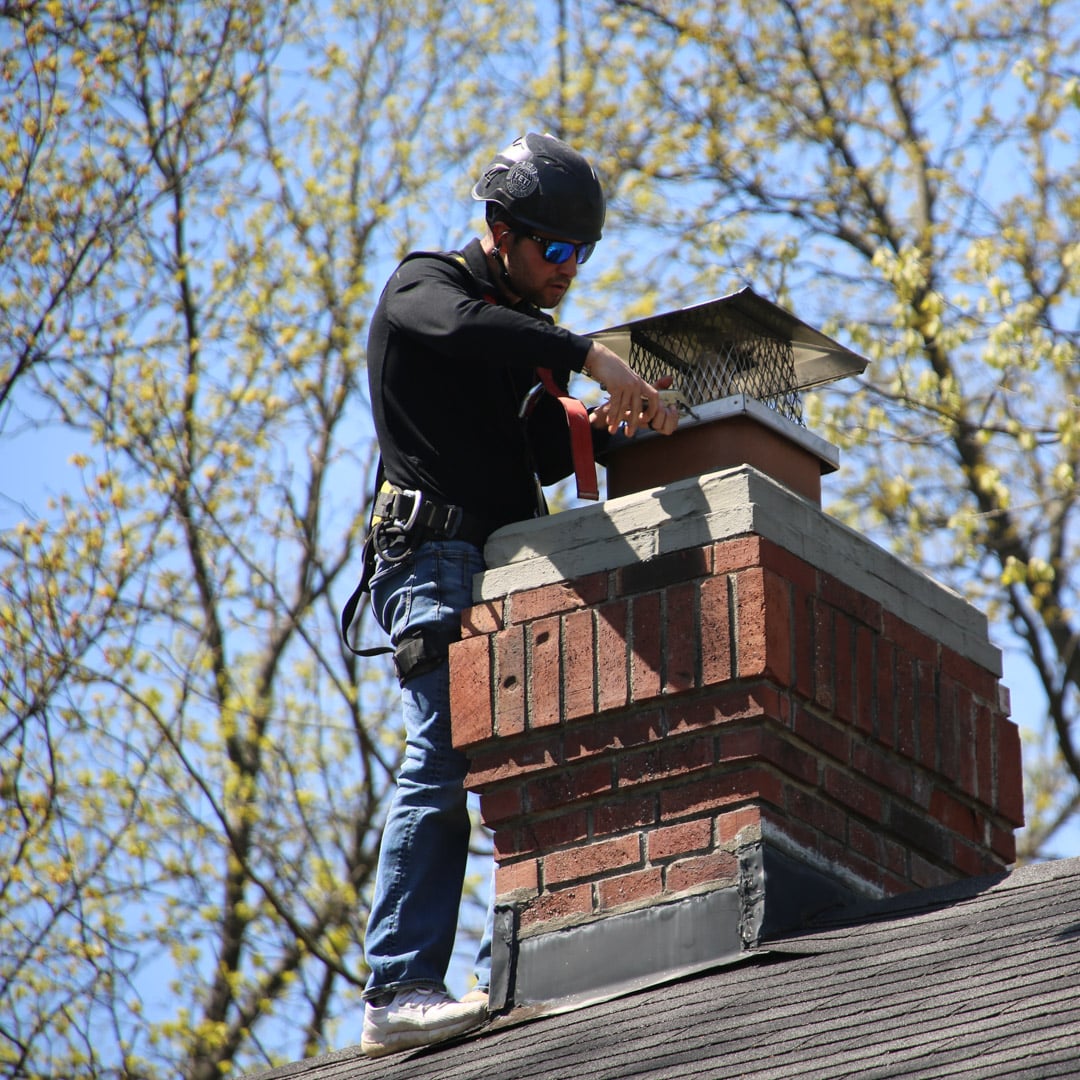 Indiana spring storms are not gentle. High winds, driving rain, and hail hit the Fishers area every year with enough force to dislodge, dent, and destroy chimney caps on homes throughout Hamilton County. The problem is that most homeowners never look.
You cannot see your chimney cap from the ground. You cannot see it from a window. And without an annual inspection, a cap that was knocked loose in April can quietly let water into your chimney system for months before the damage becomes visible inside.
Here is what to know about chimney cap damage after Indiana’s spring storm season.
What Does a Chimney Cap Actually Do?
The chimney cap sits at the top of the flue opening and serves three critical functions. It keeps water out by shielding the flue from direct rain entry. Without it, water saturates the flue liner and masonry from above, accelerating deterioration throughout the chimney system. It blocks animals, preventing birds, squirrels, and raccoons from nesting in the flue, where nests create blockages and serious fire hazards. And it stops downdrafts, preventing high winds from pushing smoke and combustion gases back down into the living space.
Without a functioning cap, the interior of your chimney is exposed to every storm that rolls through Fishers.
How Do Indiana Spring Storms Damage Chimney Caps?
Several storm events common to central Indiana cause chimney cap damage, often without leaving any obvious sign on the ground.
Straight-line winds are the most common cause. Wind speeds of 50 to 60 miles per hour can dislodge caps that were improperly installed or have already developed loose fasteners from age and thermal cycling. Speeds above 60 mph can remove even well-seated caps entirely.
Hail impacts dent or punch through single-layer galvanized caps, especially older styles. Once the metal is compromised, rust accelerates and the cap loses its ability to shed water. Tree limbs and windblown debris can strike a chimney cap with enough force to knock it entirely off the flue. Even smaller branches can dislodge a cap that was already loose from prior wear.
Freeze-thaw cycling in late winter and early spring loosens the mortar that anchors some cap styles to the chimney crown. A cap that survived the winter may separate during the final freeze cycles in March or April.
What Are the Warning Signs of a Damaged Chimney Cap?
You cannot see the cap directly from most vantage points, but you can look for these indicators from the ground or from inside the home.
– Visible gaps or tilting when viewed from a second-floor window or roofline angle
– Water stains inside the firebox or on the firebox walls
– Rust staining on the firebox floor
– Musty odor from the fireplace during humid weather
– Animal noises, scratching, or debris falling into the firebox
– Smoke problems or poor draw that did not exist before the storms
– Water stains on the ceiling near the chimney
What Types of Chimney Caps Are Available?
If your existing cap is damaged beyond repair, replacement caps come in several styles and materials. Knowing your options helps you make the right investment.
Galvanized steel single-flue caps are the most budget-friendly option. They typically last three to five years under Indiana conditions and are appropriate for homeowners who want a functional solution at the lowest cost. Stainless steel single-flue caps are the recommended standard for most Fishers and Hamilton County homeowners. They last 15 to 25 years, hold up well to temperature cycling, and do not rust through the way galvanized steel does. Top-mount stainless steel caps with mesh screening provide full coverage of the chimney crown as well as the flue opening. They last 20 or more years and are the best choice for chimneys with multiple flues or crowns that need additional protection. Copper caps are the premium option with a lifespan of 50 or more years. They develop a protective patina over time, never rust, and suit homes where appearance and absolute longevity are the priority.
What Should You Do If You Suspect Storm Damage?
Do not attempt to inspect or repair a chimney cap yourself unless you are fully equipped for roof work. Chimney cap replacement requires getting on the roof with proper safety equipment and often requires specific tools to anchor the new cap correctly.
Call a certified chimney professional to inspect the cap and the chimney crown at the same time. The crown, the concrete or mortar cap surrounding the flue, is subject to the same storm damage as the metal cap itself and is often cracked in conjunction with cap displacement.
How Much Does Chimney Cap Replacement Cost in Fishers?
A standard single-flue stainless steel cap professionally installed typically runs between $150 and $350 depending on flue size and roof access. A top-mount cap with full coverage typically runs $250 to $500 installed. These are modest investments compared to the water damage that accumulates in an uncapped chimney over a single Indiana storm season.
Protect Your Chimney After Spring Storms
Chimney Solutions Indiana serves Fishers, Noblesville, Carmel, Indianapolis, Westfield, and surrounding communities in central Indiana. If your chimney cap took a hit this spring, we can inspect the entire system and get it replaced quickly. Call (317) 757-6979 or visit chimneysolutionsindiana.com to schedule your post-storm chimney cap inspection. Do not let one storm season’s damage become a full season of water intrusion.